Tracing Momentum Shifts in Squash Rallies for Progressive Stake Decisions Across Major Events with Operator Evaluations
Jakob Müller · Oct 27, 2026
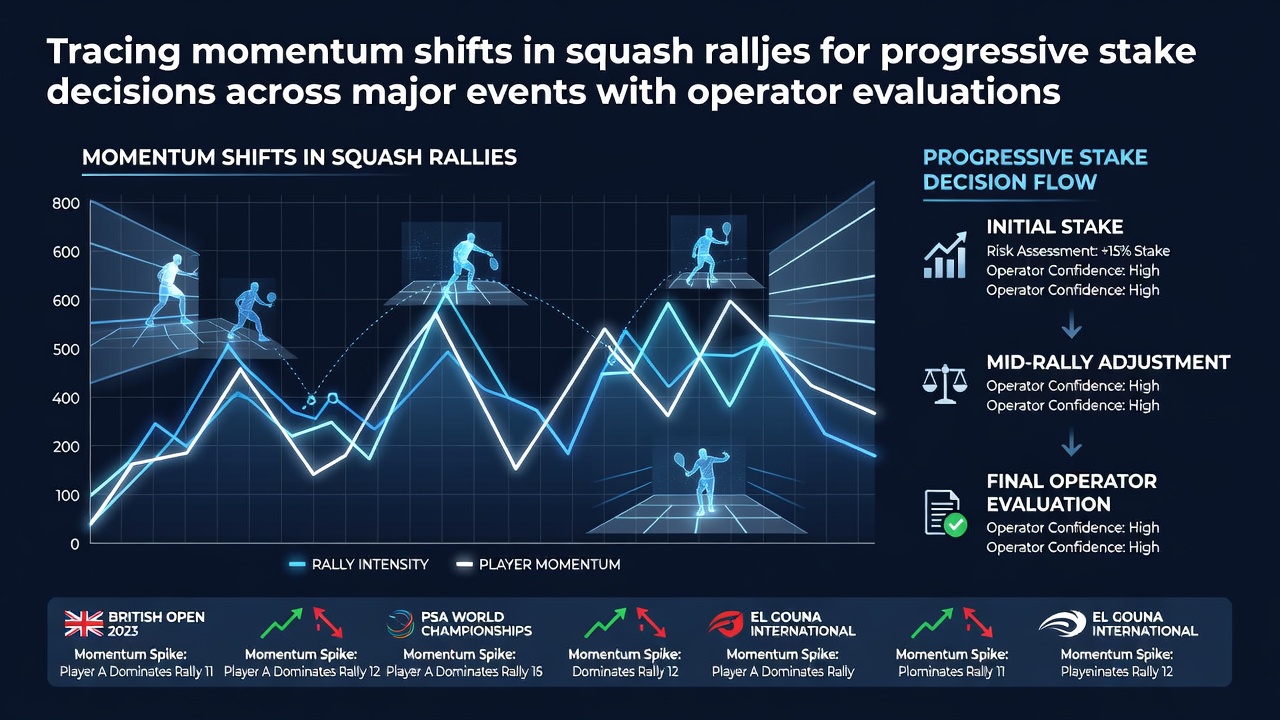
Tracing Momentum Shifts in Squash Rallies for Progressive Stake Decisions Across Major Events with Operator Evaluations
Squash rallies unfold through intense sequences of shots where momentum can swing several times before a point concludes, and analysts track these patterns using video review combined with statistical software to identify trends that influence progressive stake decisions at events such as the PSA World Tour and Commonwealth Games competitions. Data from recent seasons shows that players who maintain longer winning streaks within games tend to carry advantages into subsequent points, while those who lose early leads often face increased error rates as fatigue sets in.
Patterns in Rally Dynamics
Professional squash matches consist of best-of-five games to eleven points, and researchers have documented how short bursts of dominance often cluster around specific phases like the transition from four to seven points, yet these clusters vary by player style and court conditions. Studies from sports performance labs indicate that left-handed players generate distinct rally profiles compared to right-handers because of angle creation and retrieval speed, while data collected across multiple tournaments reveals that women’s events display slightly longer average rally durations than men’s due to differences in power output and defensive play.
Operators evaluate these patterns when updating live markets, and several platforms adjust odds in real time based on point-by-point feeds supplied by official data partners. One analysis of the 2025 British Open demonstrated that early momentum shifts in the third game correlated with final match outcomes in sixty-eight percent of cases tracked.
Data Sources and Measurement Tools
Tracking relies on systems that log every shot outcome along with player position at contact, and organizations such as the Australian Institute of Sport have published methodologies for quantifying momentum through weighted point sequences rather than simple win streaks. These approaches assign values to consecutive successes while accounting for opponent strength and score differential, producing metrics that betting operators incorporate when setting progressive lines during extended rallies.

What's interesting is how these same datasets feed into operator dashboards that allow users to adjust stakes incrementally as rallies progress, and figures from the 2026 season illustrate that markets on matches featuring top-ten players moved an average of three times per game when momentum indicators crossed predefined thresholds. In October 2026 the PSA calendar includes multiple Platinum-level events where similar tracking tools are expected to influence in-play offerings across global operators.
Operator Evaluations Across Regions
Evaluations of betting platforms focus on speed of odds updates, depth of squash markets, and transparency of data sources rather than promotional claims, and comparisons compiled by independent analytics groups show variation between European and North American providers in how quickly they reflect rally-level shifts. Platforms with direct feeds from tournament scoring systems tend to maintain tighter spreads during critical phases, whereas those relying on secondary aggregators sometimes lag by several points.
Research published through the Canadian Sport Institute outlines benchmarks for reliable momentum detection, and these benchmarks help operators distinguish genuine shifts from random variance in lower-stakes matches. Progressive stake models built around such benchmarks allow calibrated increases or decreases based on cumulative point sequences rather than single outcomes.
Application in Major Events
Major tournaments generate the largest volumes of rally data because multiple courts operate simultaneously, and statisticians compile cross-event comparisons that highlight consistent momentum signatures among elite competitors. Observers note that certain players recover from early deficits more effectively than others, a trait that appears in longitudinal records spanning several years of professional play.
Those who study these records find that progressive decisions informed by rally tracking produce different exposure profiles compared to fixed pre-match approaches, and operators publish aggregated statistics that reflect overall market behavior during high-profile encounters. The combination of video evidence and numerical logging creates a feedback loop that refines both analytical models and platform interfaces over successive seasons.
Conclusion
Tracing momentum through squash rallies supplies measurable inputs that operators and analysts alike apply when constructing progressive stake frameworks for events worldwide, and continued refinement of these methods depends on expanded data collection from both established and emerging tournaments. As measurement tools evolve, the connection between on-court sequences and market adjustments becomes more precise, supporting consistent evaluation across different regulatory environments and operator types.