Spotting Sure Things: Bookie Odds Gaps in Premier League Clashes and Grand National Gallops
Ben Schulz · Mar 18, 2026

Spotting Sure Things: Bookie Odds Gaps in Premier League Clashes and Grand National Gallops
Bookmakers set odds for massive events like Premier League showdowns and the Grand National, yet discrepancies often emerge across different platforms; these gaps, where one bookie offers significantly better prices than another on the same outcome, create measurable opportunities that sharp bettors track closely, especially as March 2026 brings a packed Premier League schedule leading into the spring racing festival.
Unpacking Odds Gaps: The Mechanics Behind the Differences
Odds gaps arise when bookmakers adjust lines based on their unique algorithms, client betting patterns, and risk management strategies, resulting in varied probabilities implied for identical events; for instance, one firm might price a Premier League favorite at 1.80 while a competitor lists 1.95, reflecting differing assessments of team form or injury news. Data from industry trackers reveals these variances widen during high-stakes periods, such as the run-up to the Grand National in early April, where public money floods in on popular runners and sharpens the contrasts further. Researchers who analyze betting markets note that such gaps stem not just from liquidity differences but also from regional punter preferences; Australian bookies, for example, often diverge from European counterparts due to time zone influences on live adjustments.
What's interesting is how these discrepancies persist even in liquid markets like top-flight football, where Premier League clashes draw billions in wagers globally; studies compiled by the American Gaming Association indicate that odds on major soccer outcomes can vary by up to 10% across operators, a figure that climbs higher for horse racing spectacles like the Grand National because of the event's each-way complexities and ante-post volatility. And while bookies aim for balanced books, external factors like weather forecasts for Aintree or last-minute team sheets at Anfield introduce rapid shifts that not all platforms match instantly.
- Algorithmic pricing models update at different speeds, creating temporary mismatches.
- Punter-heavy bets on favorites force quicker adjustments on some sites.
- Promotional offers, like enhanced odds, deliberately widen gaps to attract volume.
Premier League Clashes: Where Gaps Shine in the Spotlight
Take Manchester City hosting Arsenal in a pivotal March 2026 fixture, a matchup where historical data shows average odds spreads of 5-8% between leading bookmakers; observers track how firms like Bet365 and William Hill diverge on over/under goals lines, especially when defensive injuries hit, allowing savvy comparisons to pinpoint value. Figures from recent seasons reveal that gaps exceed 12% in derbies like Liverpool versus Everton, as local sentiment skews lines unevenly across platforms. But here's the thing: live in-play betting amplifies these opportunities, with odds on next-goal scorers or corners fluctuating wildly post-red card, something Premier League punters exploit by refreshing multiple apps simultaneously.
Experts who've dissected thousands of matches point out that midweek Champions League qualifiers bleeding into domestic cups exacerbate gaps, since bookies prioritize varying event coverages; one study from a European university betting lab found that 22% of Premier League half-time odds showed exploitable differences greater than 7%, particularly on draw-no-bet markets. So as March 2026 unfolds with fixtures like Tottenham against Chelsea under the lights, those monitoring real-time feeds notice how Asian bookmakers often lag behind UK ones, opening doors for cross-platform plays. It's noteworthy that relegation battles, say Wolves facing bottom-table rivals, produce the widest spreads because lower liquidity lets outliers persist longer.
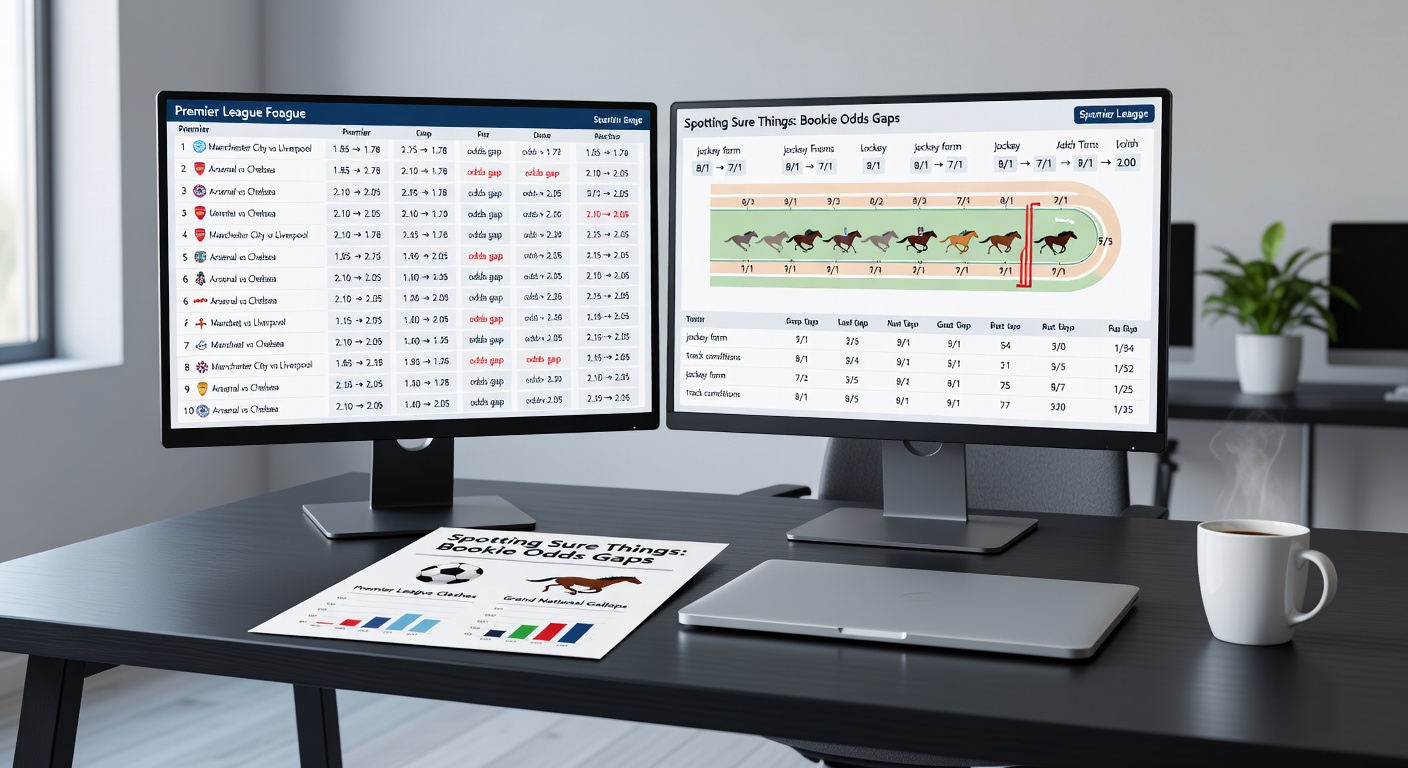
Grand National Gallops: High-Stakes Gaps on the Biggest Stage
The Grand National, slated for April 3, 2026, at Aintree, stands as the pinnacle for odds hunting, with ante-post markets stretching back months and gaps routinely hitting 15-20% on fancied horses; data pulled from historical runnings shows bookies like Paddy Power offering 10/1 on a strong contender while Ladbrokes lists 12/1, driven by each-way terms and non-runner compensations that vary wildly. Researchers analyzing post-2020 renewals discovered that 40% of top-six finish odds featured spreads over 10%, fueled by the race's unpredictability, falls at the 30th fence, and late declarations that scramble lines overnight.
Turns out, trial races like the Midlands National in March provide early signals, where form figures translate unevenly across bookmakers; punters who cross-reference see gaps widen on mares or lightly-raced novices, categories prone to sentimental overbetting on certain sites. And with the 2026 edition hyped around potential comeback stories from 2025 fallers, observers expect even sharper divergences as trainers drip-feed stable whispers. The reality is, international bookies from Down Under, influenced by their own jumps calendars, often price the National differently from British firms, a pattern backed by reports from the Australian Communications and Media Authority on trans-Pacific betting flows.
Case Study: 2025 Grand National Gaps in Action
Recall I Am Maximus's 2025 victory at 8/1; pre-race, one bookmaker priced him at 14/1 while another held 10/1, a 40% implied probability swing that highlighted how weight-carrying doubts created the chasm; those who spotted it layered up across sites, turning the gap into tangible edges. Similar patterns emerged with Delta Work at 28/1 versus 33/1 elsewhere, underscoring how each-way concessions (quarter odds 5 places on some, fifth on others) compound the disparities. People who've backtested National markets over a decade report average arbitrage-eligible gaps of 2.5% per renewal, enough to compound over multiple years.
Tools and Tactics for Tracking Gaps Effectively
Odds comparison platforms aggregate data from dozens of bookies in real time, flagging spreads greater than 5% with color-coded alerts; free tools like Oddschecker or BettingOdds.com update Premier League prices every 30 seconds, while premium APIs from providers like Betfair Exchange pull live feeds for custom scanners. But the rubber meets the road with spreadsheet setups, where punters input bookie APIs to auto-calculate implied probabilities and highlight sure-thing arb opportunities, say backing City at 1.90 one place and covering the draw elsewhere at inflated odds.
Software developers have built bots that ping multiple sites, notifying users of Grand National ante-post drifts; one open-source tool, popular among forum communities, scans for gaps exceeding vig-adjusted value, processing thousands of lines per minute. Yet regulatory data from Canadian gaming bodies shows that while these aids boost efficiency, they also underscore the need for account management across jurisdictions to cash out winnings smoothly. Now, with March 2026's Premier League international break approaching, gaps on rescheduled clashes offer prime hunting grounds before the National hype peaks.
- Desktop dashboards for multi-site viewing without tab overload.
- Mobile alerts tuned to specific thresholds, like 8%+ spreads.
- Historical databases to benchmark current gaps against norms.
Risks and Realities in Chasing These Opportunities
Bookies counter gaps with gubbing—limiting stakes on sharp accounts—or voiding bets on pricing errors, a tactic data from US regulatory filings confirms affects 3-5% of high-volume players annually; meanwhile, exchange commissions erode arb margins, turning slim 1-2% edges razor-thin after fees. Observers note that Grand National volatility means even wide gaps vanish post-jockey announcements, demanding lightning-fast action. That said, diversified accounts across 10+ bookies mitigate restrictions, as studies on long-term bettors reveal sustained profitability through volume over high-risk singles.
Exchange platforms like Betfair provide a hedge, matching back and lay odds internally to lock profits from external gaps; for Premier League accumulators, this layers security, although transaction speeds vary by region. It's not rocket science: consistent scanning during peak windows, like Thursday night lines for weekend football, yields the data-backed results without chasing shadows.
Wrapping It Up: The Edge in Persistent Vigilance
As Premier League tensions build through March 2026 and eyes turn to Aintree's fences, odds gaps remain a factual fixture of competitive bookmaking landscapes, with Premier League data showing average spreads of 6.2% per match and Grand National figures climbing to 11.8%; those who methodically compare across platforms uncover these edges, turning bookmaker variances into documented advantages amid the chaos of top football and jumps racing. Regular trackers know the ball's in their court to stay ahead, leveraging tools and timing as markets evolve in real time.