How Elevation Changes Rewrite Market Expectations Across Mountain-Based Athletic Contests
Henrik Reed · Aug 11, 2026
How Elevation Changes Rewrite Market Expectations Across Mountain-Based Athletic Contests
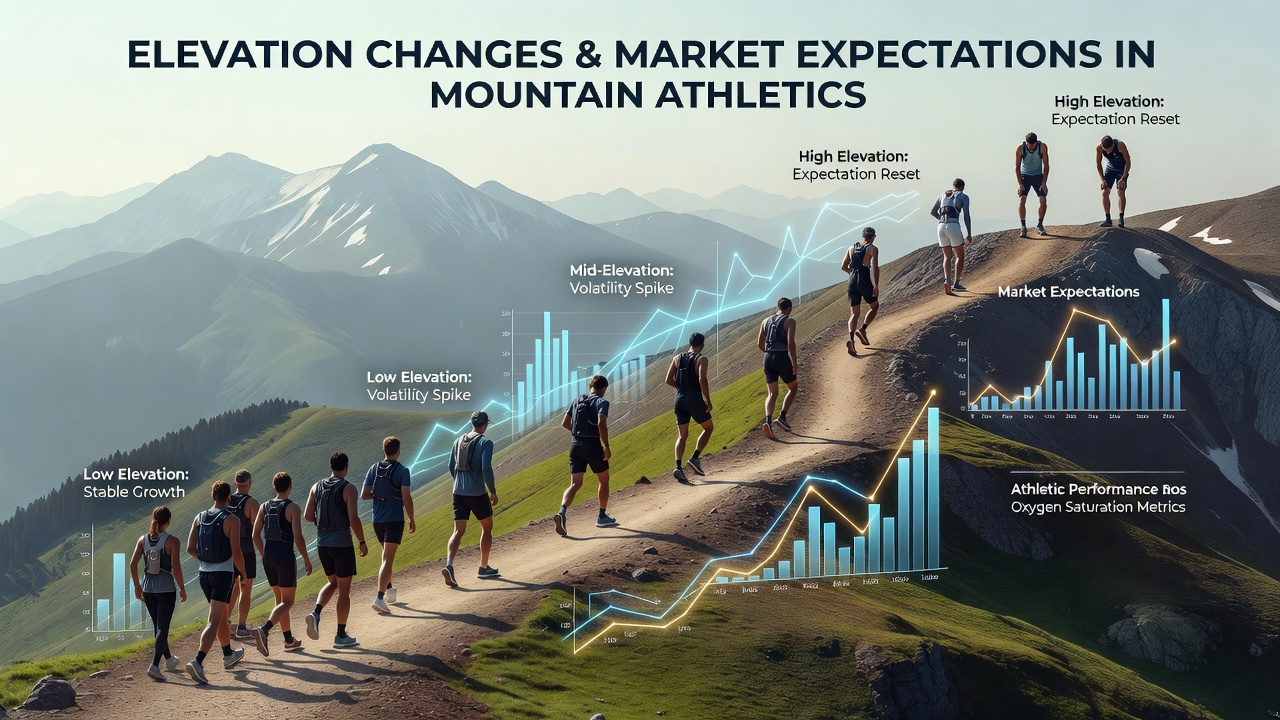
Altitude shifts create measurable changes in human performance during endurance events held above 1,500 meters, and those shifts directly influence how betting markets set and adjust odds for mountain-based contests. Lower oxygen availability reduces aerobic capacity, while altered thermoregulation and hydration demands compound fatigue over extended durations, according to data compiled by sports physiology programs at multiple research institutions.
Physiological Mechanisms Behind Performance Shifts
Studies from the University of Colorado Sports Medicine program show that every 1,000-meter gain in elevation decreases VO2 max by approximately 8 to 11 percent in unacclimatized athletes, with partial recovery occurring after 10 to 14 days of exposure. Heart rate rises faster at altitude because blood carries less oxygen per unit volume, forcing competitors to operate at higher percentages of their maximum capacity even when maintaining identical speeds. These biological responses become most pronounced during sustained efforts lasting beyond 90 minutes, such as multi-stage cycling ascents or high-altitude trail marathons.
Researchers tracking race results across different elevations note that finishing times lengthen nonlinearly once courses exceed 2,500 meters, because glycogen depletion accelerates while recovery between repeated high-intensity bursts slows. Acclimatized athletes from highland regions often retain advantages in these conditions, producing outcomes that deviate from sea-level form guides used by market makers.
Market Adjustments in Cycling and Trail Events
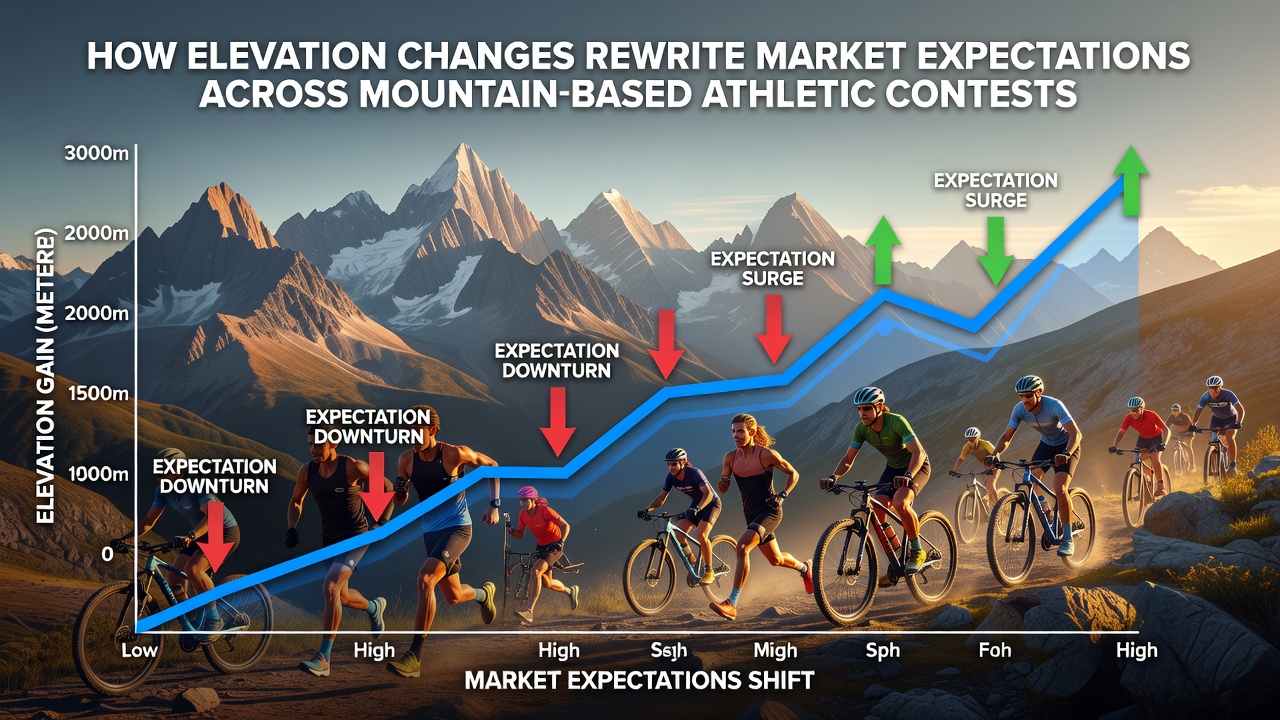
Bookmakers recalibrate odds for mountain stages in events like the Tour de France when weather forecasts predict temperature drops at summit finishes, since cooler air at elevation increases density and alters aerodynamics while simultaneously stressing thermoregulation. Historical performance databases reveal that riders with prior high-altitude training camps post better results on climbs above 2,000 meters, prompting odds compilers to weight recent altitude-specific results more heavily than general classification standings.
Trail running markets similarly reflect elevation data, with organizers of races such as the Ultra-Trail du Mont-Blanc publishing course profiles that detail cumulative ascent; these figures allow statistical models to predict time gaps between elite competitors who train regularly above 2,000 meters versus those whose preparation occurs nearer sea level.
Winter Mountain Disciplines and Seasonal Data
Biathlon and cross-country skiing events scheduled at venues above 1,800 meters demonstrate parallel patterns, where thinner air reduces drag on skis yet simultaneously limits oxygen uptake during uphill sections. Competition records maintained by the International Biathlon Union indicate that shooting accuracy remains relatively stable, while lap times vary more widely with elevation gain, creating wider spreads in live betting lines once races progress past the first loop.
August 2026 training camps for athletes preparing for upcoming winter circuits will likely emphasize simulated altitude protocols, since several major events planned for the following season include high-elevation venues in the Alps and Rockies; market analysts already monitor pre-season results from these camps because early indicators of acclimatization success influence opening odds released months in advance.
Statistical Modeling and Odds Recalibration
Quantitative teams employed by major operators integrate elevation profiles into regression models that combine historical split times, GPS-derived power outputs, and acclimatization timelines. When new course measurements become available, such as updated vertical gain totals for a revised mountain marathon route, odds shift within hours because the models assign higher weight to altitude-adjusted pace predictions than to unadjusted career averages.
Live betting platforms further refine these expectations during events by incorporating real-time heart-rate telemetry and weather station readings from summit locations, allowing rapid line movements that reflect emerging gaps between competitors who handle reduced oxygen differently. Data aggregated across multiple seasons shows that markets achieve greater efficiency when elevation variables enter calculations early, reducing the frequency of large post-race corrections.
Regional Variations and Athlete Cohorts
Athletes born and trained at moderate altitudes in regions such as the Ethiopian highlands or Andean communities often post smaller performance decrements at 3,000 meters compared with lowland peers, a pattern documented in peer-reviewed papers from the Australian Institute of Sport. Betting syndicates track passport data and training-camp locations because these background factors produce measurable edges in head-to-head markets once elevation exceeds 2,200 meters.
European circuits that rotate among venues with differing base elevations, including several ski-jumping hills in the Alps, exhibit similar cohort effects; jumpers who train year-round above 1,000 meters maintain more consistent distances when wind conditions interact with thinner air at takeoff points.
Conclusion
Elevation data now forms a core input in performance forecasting systems used across mountain athletic contests, driving continuous recalibration of market expectations before and during events. Physiological measurements, historical results stratified by altitude, and real-time environmental readings together produce tighter, more responsive odds that reflect the quantifiable impact of reduced oxygen availability on endurance outputs. As training methodologies evolve and new high-elevation venues enter calendars, these adjustments will continue to shape pricing structures for contests held in thin air.